
How to Improve Taekwondo Footwork at Home: Best Solo Drills
Boost your agility, distance control, and sparring reaction speed with these effective solo Taekwondo footwork drills designed for home practice.

Footwork is the engine of Taekwondo sparring and forms. While high kicks and rapid combinations attract attention, your footwork determines whether those strikes land on target. Precise foot movement allows you to control combat distance, establish favorable striking angles, evade incoming counterattacks, and maintain equilibrium at all times.
Training footwork at home is one of the most effective ways to build combat agility. You do not need a sparring partner or specialized gym equipment to sharpen your feet. Solo drills isolate fundamental movement mechanics, enabling you to refine your stance, balance, transition speed, and directional acceleration.
By incorporating structured solo movement patterns into your regular routine, you develop muscle memory that translates directly to sparring performance. Whether you are building basic stance fluidity or learning complex multi-directional evasions, these home drills will systematically improve taekwondo footwork.
To improve taekwondo footwork at home, focus on three primary movement patterns: linear distance control, continuous stance switching, and lateral angling. Practicing explosive forward and backward dashes trains you to manage ring distance and escape counters. Continuous stance switches keep your upper body balanced while maintaining movement fluidity. Finally, lateral patterns like side dashes, V-steps, and zig-zag switches allow you to step off the centerline, creating scoring angles while keeping your guard high and core engaged.
The Fundamentals of Taekwondo Footwork Technique
Understanding proper taekwondo footwork technique starts with weight distribution and stance posture. In Taekwondo, practitioners maintain a dynamic fighting stance with weight resting primarily on the balls of the feet rather than sitting flat on the heels. Slight knee flexion acts as a spring, allowing instant movement in any direction without telegraphing.
Speed comes from relaxation rather than muscle tension. Keeping your upper body, shoulders, and hips relaxed allows your legs to react instantly to visual openings. Your core serves as the anchor between upper-body poise and lower-body speed; keeping your core engaged prevents body sway when changing direction.
Distance management depends entirely on your footwork. Precise movement keeps you just millimeters out of your opponent's striking range while placing you within ideal range for an explosive blitz or counter-kick. Home solo training lets you internalize these spatial distances through repeated practice.
Linear Footwork Drills for Range Control
Linear drills develop forward acceleration and backward retreat along the center line. Linear speed allows you to close distance rapidly for scoring blitzes or escape aggressive counter-attacks safely.
To train rapid linear transitions, practice the Forward Dash Switch + Backward Dash Switch drill. Pushing off the back foot propels you forward into an explosive stance switch, followed immediately by a back-foot push that pulls you backward into another stance switch.
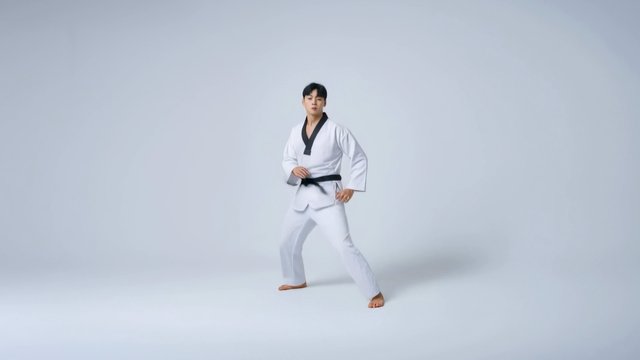
To increase endurance and distance control, advance to the Double Forward Dash Switch + Double Backward Dash Switch. This drill requires two consecutive forward dashes before jumping into a stance switch, followed by two backward dashes. Focus on explosive push-offs while staying light on your feet.
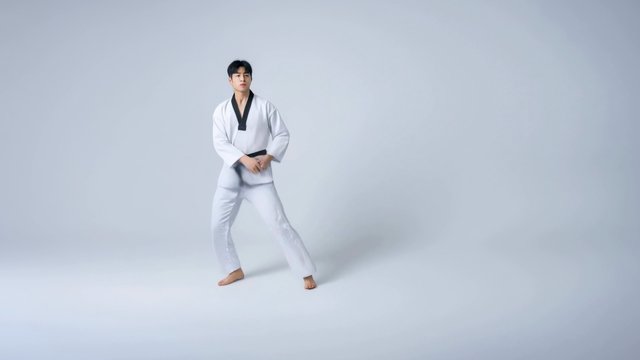
Combine turning mechanics with linear range adjustment using the Turn Step Forward + Backward Dash exercise. Pivot your lead foot and step forward with your rear foot to align your stance, then push off forcefully to retreat backward.
Stance Switches and Rotational Speed Drills
Stance switching alters your lead leg, resets your kicking options, and disrupts your opponent's timing. A sharp stance switch can feint an attack or open counter opportunities.
Begin stance training with the Continuous Switch drill. Jump and switch your stance continuously on the spot while maintaining a high guard and steady rhythm.
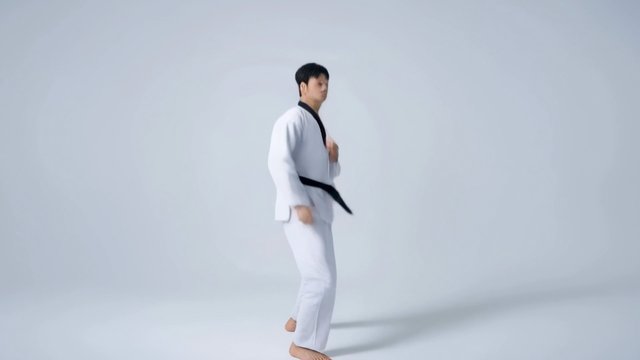
Add forward and backward travel to your switches with the Continuous Switch Forward/backward drill. Move forward by stepping with your front foot during the switch, then reverse direction by stepping backward with your back foot.
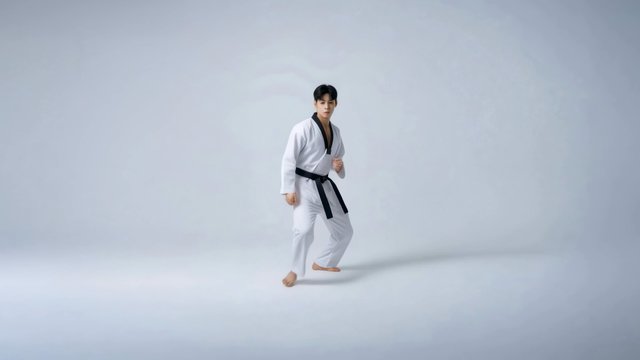
To prepare for spinning attacks and rear-leg counters, work on the Reverse Switch drill. Pivot on your front foot, turn your body, and jump into the opposite stance while maintaining visual sight on your target.
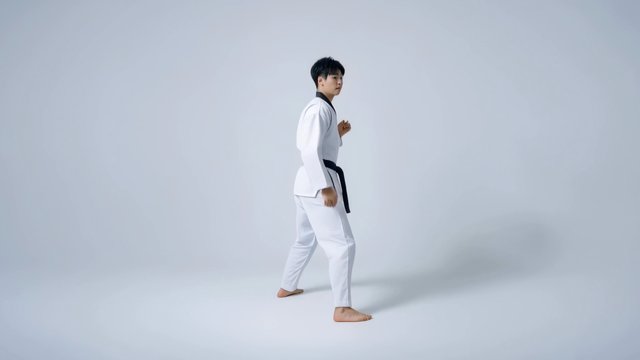
To escape pressures off a turn step, execute the Reverse Turn Step + Backward Dash. Step your lead foot across your body, rotate on the pivot foot, and immediately push off into an explosive backward dash.
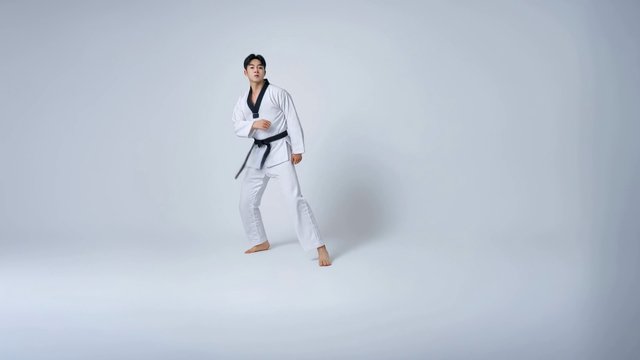
Lateral Agility and Angling Drills
Moving solely in straight lines makes your attacks predictable. Lateral footwork drills teach you to step off the centerline, opening up side channels for scoring roundhouse or back kicks.
The core lateral movement pattern is the Side Dash. Shift your body weight quickly, push off with your trailing foot, and slide sideways while keeping your guard raised and stance low.
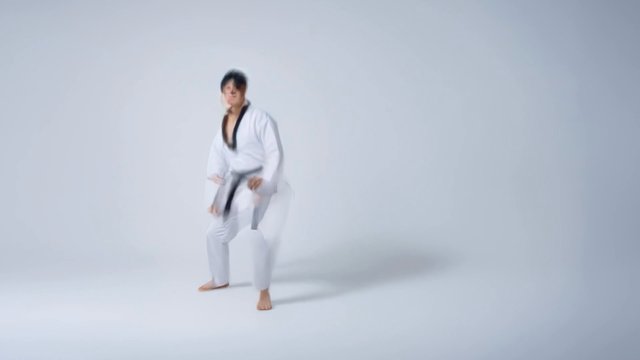
For rapid lateral stance switches, practice the Side Dash Switch 2 times exercise. Dash sideways and execute two consecutive mid-air stance switches before resetting your guard.

Diagonal entries confuse opponents by changing attacking lines. The V-Step exercise involves stepping forward diagonally with one foot and outward with the other to form a sharp 'V' pattern.
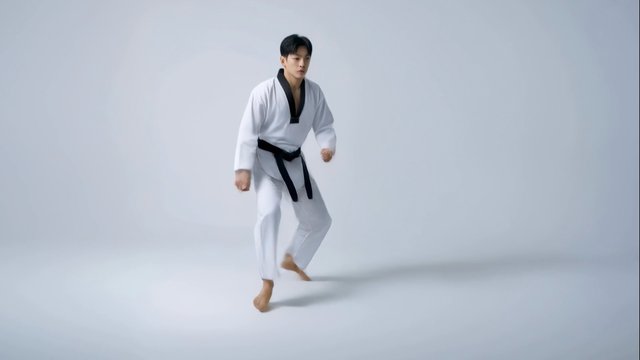
To combine diagonal entry with air switches, perform the V-Step Switch drill. Complete the diagonal V-step, jump to switch your stance in mid-air, and land softly in a balanced guard position.
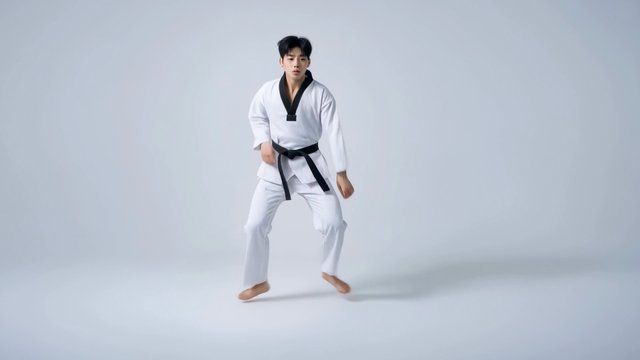
For continuous dynamic direction shifts, practice the Zig-Zag Switch drill. Travel forward diagonally in a zig-zag pattern on the balls of your feet, switching your stance at each apex.
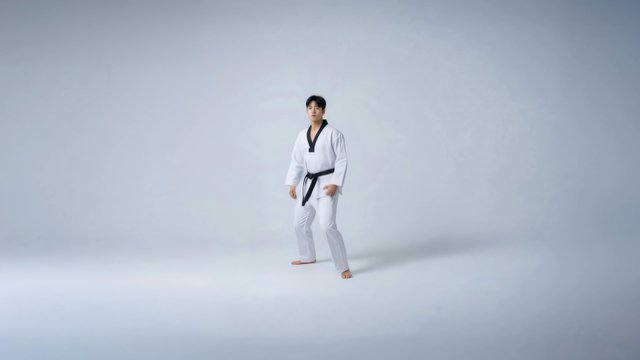
Guidelines for Effective Home Footwork Sessions
- Train on Non-Slip Surfaces: Use clean puzzle mats or non-slip flooring to ensure firm traction when executing explosive push-offs and mid-air switches.
- Work in Timed Intervals: Perform drills in 45-to-60-second high-intensity intervals to match the energy demands of competitive rounds.
- Maintain Guard Posture: Keep your hands raised and elbows tucked during every switch and dash to establish defensive muscle memory.
- Prioritize Precision Over Speed: Focus on clean foot landings and balance before increasing movement speed.
Common mistakes
Why it holds you back: Flat feet eliminate knee spring recoil, severely slowing down reaction time and explosive movement. Fix: Keep your heels slightly elevated and stay light on the balls of your feet throughout every drill.
Why it holds you back: Dropping your hands leaves your head completely exposed to incoming counter-kicks during movement. Fix: Engage your core, keep your elbows close to your ribs, and maintain a steady high guard at eye level.
Why it holds you back: Crossing your feet destroys balance and leaves you completely vulnerable to sweeps or pushes. Fix: Push off the trailing foot and step out with the lead foot first to maintain a balanced base.
Why it holds you back: Leaning telegraphs your intent, compromises balance, and makes rapid backward retreats impossible. Fix: Engage your core to keep your spine upright and centered over your hips during movement.
10-Minute Home Taekwondo Footwork Routine
Perform each drill for 60 seconds, followed by 15 seconds of rest. Complete 2 rounds total.
- Continuous Switch 60 seconds (suggested) — Stay light on the balls of your feet and keep your hands up in a ready guard.
- Forward Dash Switch + Backward Dash Switch 60 seconds (suggested) — Explode forward and backward with sharp, controlled stance transitions.
- Side Dash Switch 2 times 60 seconds (suggested) — Slide quickly sideways and execute explosive double stance switches.
- V-Step Switch 60 seconds (suggested) — Trace sharp diagonal angles before jumping into mid-air stance switches.
- Zig-Zag Switch 60 seconds (suggested) — Maintain a steady zig-zag rhythm while keeping your core engaged.
Durations marked “suggested” are editorial recommendations, not data from the app.
Was this helpful?
Thanks for your feedback!
Comments
No comments yet — be the first.